

Acid reflux is commonly known for causing heartburn, but its effects can extend beyond the digestive system and impact the respiratory tract as well.
Many people are surprised to learn that reflux can trigger a persistent cough, sometimes accompanied by mucus production. This occurs when stomach acid irritates the throat, airways, or even reaches the lungs, leading to inflammation and increased mucus secretion.
Understanding the connection between acid reflux and respiratory symptoms is important for identifying the underlying cause and choosing the most effective treatment.

Download our free guide that has over 100+ of the best tips for healthy lungs.
Can Acid Reflux Cause a Cough With Mucus?
Yes, acid reflux can cause a cough with mucus, especially when stomach acid travels up into the esophagus and irritates the throat or airways. This irritation leads to inflammation, which triggers the body to produce excess mucus as a protective response. The buildup of mucus can create a sensation of something stuck in the throat and lead to frequent coughing or throat clearing.
In many cases, this type of cough is linked to laryngopharyngeal reflux (LPR), a form of reflux that affects the upper airway and may occur without typical heartburn symptoms. The cough often worsens after eating, when lying down, or during the night.
In addition to mucus and coughing, individuals may experience hoarseness or throat discomfort. Treating the underlying reflux with lifestyle changes and medications can help reduce both mucus production and the persistent cough.
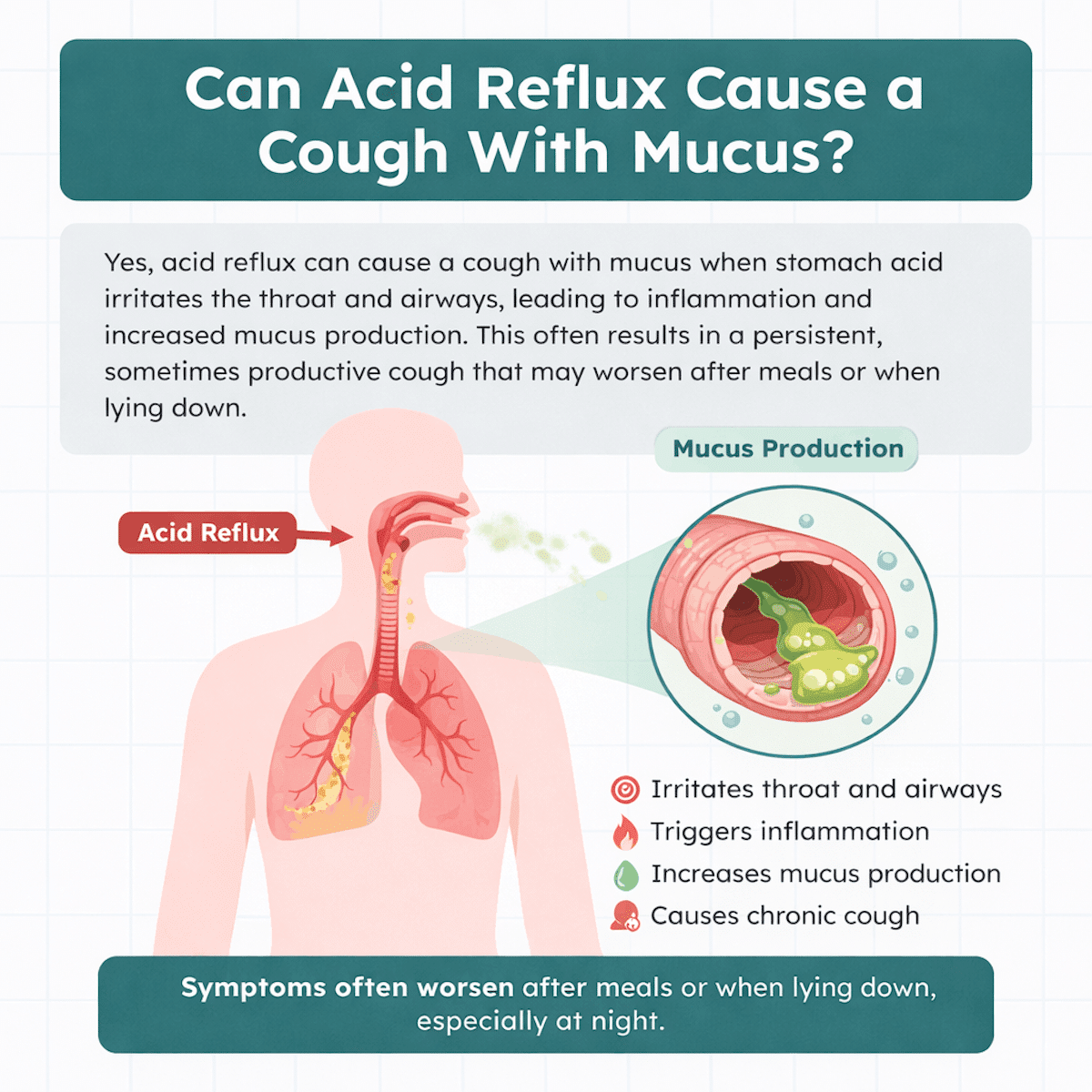
Understanding the Link Between Acid Reflux and Mucus-Related Cough
Acid reflux triggers cough with mucus through direct irritation of the throat and airways, leading to increased mucus production as a protective response. The body reacts to stomach acid exposure by producing excess mucus to coat and protect irritated tissues.
How Acid Reflux Causes Cough With Mucus
Acid reflux occurs when stomach acid flows backward into the esophagus and throat. This acid can reach the larynx and upper airways, causing irritation to sensitive tissues.
When stomach acid contacts the throat and vocal cords, it creates inflammation and triggers nerve reflexes. These reflexes stimulate coughing as the body attempts to clear the perceived irritant from the airways.
The acid may also enter the respiratory tract through small amounts of aspiration, particularly during sleep when lying flat. This direct contact with bronchial tissues intensifies the cough response and prompts mucus secretion.
Note: Two main mechanisms connect acid reflux to coughing: the reflux theory involves direct acid contact with airways, while the reflex theory describes nerve stimulation in the esophagus that triggers cough without acid reaching the throat.
Symptoms of Cough Associated With Acid Reflux
The cough from acid reflux typically appears as a chronic, dry cough that persists for more than eight weeks. However, many patients experience mucus production alongside their cough.
This cough often worsens after meals, when lying down, or during nighttime hours. Patients frequently notice throat clearing becomes necessary throughout the day.
Common accompanying symptoms include:
- Hoarseness or voice changes
- Sore throat or throat irritation
- Post-nasal drip sensation
- Difficulty swallowing
- Bitter or acidic taste in the mouth
- Burning sensation in the chest or throat
Note: The mucus associated with this condition often appears clear or white rather than yellow or green. Many people describe feeling like something is stuck in their throat that requires constant clearing.
Why Mucus Production Increases
The throat and airways contain mucus-producing glands that activate in response to irritation. When acid repeatedly contacts these tissues, the glands increase mucus output as a protective mechanism.
This excess mucus serves to coat and shield the irritated lining from further acid damage. The body interprets the acid exposure as a threat requiring additional lubrication and protection.
Chronic inflammation from repeated acid exposure also stimulates goblet cells in the respiratory tract to produce more mucus. This inflammatory response continues as long as acid reflux remains untreated or poorly controlled.
Note: The increased mucus combines with the cough reflex to create a cycle where coughing brings up phlegm, which temporarily relieves throat irritation but doesn’t address the underlying acid problem.
Mechanisms Behind Acid Reflux-Induced Cough
Acid reflux triggers coughing through direct irritation of the throat and esophagus, alongside indirect effects on the airways and lungs. The body’s protective reflexes respond to acidic content in areas outside the stomach, creating persistent respiratory symptoms.
Role of Stomach Acid Irritation
Stomach acid that travels backward into the esophagus directly contacts sensitive tissue not designed to withstand its corrosive properties. The esophageal lining becomes inflamed when exposed to gastric contents, including hydrochloric acid and digestive enzymes.
This irritation extends to the throat and larynx when acid reaches higher areas. The vocal cords and surrounding structures respond to acidic exposure with inflammation and swelling. Nerve endings in these regions detect the chemical irritation and trigger cough reflexes as a protective mechanism.
The vagus nerve plays a central role in transmitting signals from irritated esophageal tissue to the brain’s cough center. Even small amounts of acid can activate these nerve pathways. The resulting cough attempts to clear the perceived threat from the airways, though the actual irritant remains in the esophagus or throat.
Impact on the Respiratory Tract
Acid droplets can enter the airways through aspiration, particularly during sleep when protective reflexes are reduced. When gastric contents reach the lungs or bronchial tubes, they cause chemical injury to respiratory tissue. This process, called microaspiration, leads to inflammation of the bronchial lining.
The respiratory tract responds by increasing mucus production to protect damaged tissue and trap irritants. Airways may become hyperreactive, similar to asthma responses, making them more sensitive to various triggers.
Chronic exposure to acid in the respiratory system can damage the delicate cilia that normally clear mucus and debris. This impairment allows mucus to accumulate, leading to productive coughing as the body attempts to expel secretions.
Gastroesophageal Reflux Disease and Persistent Cough
Gastroesophageal reflux disease (GERD) represents chronic acid reflux that occurs at least twice weekly and causes ongoing esophageal damage. Patients with GERD experience repeated acid exposure that maintains constant irritation of the esophagus and throat.
A persistent cough becomes a defining feature when GERD affects the respiratory system. The cough may worsen after meals, when lying down, or during nighttime hours when acid more easily flows upward. Some individuals develop a chronic cough as their primary GERD symptom without experiencing typical heartburn.
The lower esophageal sphincter weakens in GERD patients, failing to prevent stomach contents from entering the esophagus. This dysfunction creates a cycle where coughing itself can worsen reflux by increasing abdominal pressure. The relationship between GERD and chronic cough often requires specific testing to confirm, as the cough may persist even when other reflux symptoms improve with treatment.
Differentiating Acid Reflux Cough From Other Coughs
Acid reflux-related coughs have specific characteristics that set them apart from respiratory infections and allergies, though some overlap exists. Recognizing these distinctions helps identify the underlying cause and guides appropriate treatment decisions.
Distinct Features of Acid Reflux-Related Cough
An acid reflux cough typically occurs after meals or when lying down. The cough often worsens at night when stomach acid can more easily flow back into the esophagus and throat.
Patients frequently notice the cough accompanies heartburn, a sour taste in the mouth, or throat clearing. The mucus produced tends to be clear or white rather than colored. This cough rarely comes with fever or body aches.
The pattern is persistent and chronic, lasting weeks or months rather than days. Many people find their symptoms improve when they avoid trigger foods or take antacids. The cough may intensify after consuming spicy foods, caffeine, or alcohol.
Key identifying factors include:
- Onset timing related to eating or lying down
- Association with heartburn or regurgitation
- Absence of fever or systemic illness
- Clear or white mucus production
- Improvement with acid-suppressing medications
Comparing With Respiratory Infections
Respiratory infection coughs develop quickly over hours to days. These coughs typically produce yellow, green, or rust-colored mucus indicating bacterial or viral involvement.
Patients with respiratory infections usually experience fever, chills, body aches, and fatigue. The cough may be accompanied by nasal congestion, sinus pressure, or chest tightness. Symptoms generally resolve within one to three weeks with or without treatment.
Respiratory infections often spread among household members or coworkers. The mucus production is usually heavier and more consistent throughout the day. Breathing difficulties or wheezing may develop in some cases, particularly with bronchitis or pneumonia.
Similarities to Allergy-Related Coughs
Allergy coughs and acid reflux coughs both produce chronic symptoms that persist for weeks or months. Both conditions can cause throat irritation and frequent throat clearing without fever or systemic illness.
Allergic coughs often involve clear or white mucus similar to acid reflux. The timing differs, as allergy symptoms worsen with specific triggers like pollen, dust, or pet dander rather than meals.
Seasonal patterns help distinguish allergies from acid reflux. Allergy sufferers typically experience additional symptoms like sneezing, itchy eyes, or nasal congestion. Antihistamines provide relief for allergies but do not improve acid reflux symptoms.
Diagnosing Acid Reflux as the Cause of Cough With Mucus
Identifying acid reflux as the source of a persistent cough with mucus requires medical evaluation that combines symptom assessment with specialized testing. Healthcare providers look for specific patterns and use diagnostic tools to confirm whether stomach acid is reaching the throat and airways.
Diagnostic Tests and Evaluations
Doctors typically start with a detailed medical history and physical examination to assess symptoms and their timing. An upper endoscopy allows direct visualization of the esophagus and throat to check for inflammation, irritation, or damage caused by stomach acid.
pH monitoring measures acid levels in the esophagus over 24 hours using a thin probe inserted through the nose. This test reveals when and how often acid reflux occurs, especially during episodes of coughing. It’s considered one of the most reliable methods for confirming reflux-related respiratory symptoms.
Esophageal manometry evaluates how well the lower esophageal sphincter functions and measures the strength of muscle contractions. A barium swallow X-ray can show structural abnormalities or reflux patterns as patients swallow a contrast liquid.
Some physicians perform an empirical trial of acid-suppressing medications like proton pump inhibitors for 8 to 12 weeks. If the cough and mucus significantly improve during this period, it suggests acid reflux as the underlying cause.
Signs to Watch For
A chronic cough that worsens after meals or when lying down strongly suggests reflux as the trigger. The cough often produces thick, white or clear mucus and may be accompanied by throat clearing.
Patients frequently report a sour or bitter taste in the mouth, particularly in the morning. Hoarseness, a sensation of a lump in the throat, and frequent throat irritation are common associated symptoms.
The cough typically persists for at least eight weeks and doesn’t respond to standard cough medications or antibiotics. It may worsen at night or after consuming acidic foods, caffeine, or large meals.
When to See a Healthcare Provider
Anyone experiencing a persistent cough with mucus lasting more than three weeks should consult a doctor. Immediate medical attention is necessary if the cough produces blood, causes severe chest pain, or leads to difficulty breathing.
Patients who notice their cough consistently occurs after eating or when bending over should seek evaluation for possible reflux. Those with heartburn, regurgitation, or chest discomfort alongside respiratory symptoms need professional assessment.
A healthcare provider should evaluate symptoms that interfere with sleep quality or daily activities. People who’ve tried over-the-counter remedies without improvement require proper diagnosis to identify the root cause and receive appropriate treatment.
Treatment Strategies for Acid Reflux-Related Cough With Mucus
Managing acid reflux-related cough with mucus requires addressing stomach acid production, adjusting daily habits, and targeting respiratory symptoms. A combination of medication, behavior changes, and mucus-reducing therapies provides the most effective relief.
Medications for Managing Acid Reflux
Proton pump inhibitors (PPIs) are the primary medications for treating acid reflux-related cough. These drugs, including omeprazole, lansoprazole, and esomeprazole, reduce stomach acid production by blocking the enzyme responsible for acid secretion. Patients typically take PPIs once or twice daily, 30 minutes before meals.
Most individuals need 8 to 12 weeks of PPI therapy before experiencing significant cough improvement. The delayed response occurs because the esophagus and airways require time to heal from acid damage.
H2 receptor antagonists like famotidine and ranitidine serve as alternative options. These medications block histamine receptors in the stomach to decrease acid production. They work faster than PPIs but offer less potent acid suppression.
Antacids provide quick, temporary relief by neutralizing existing stomach acid. Products containing calcium carbonate, magnesium hydroxide, or aluminum hydroxide can reduce symptoms within minutes but last only 1 to 3 hours.
Lifestyle Modifications
Elevating the head of the bed by 6 to 8 inches prevents stomach acid from flowing back into the esophagus during sleep. Patients should use bed risers or a wedge pillow rather than stacking regular pillows.
Avoiding trigger foods reduces acid production and reflux episodes. Common triggers include citrus fruits, tomatoes, chocolate, mint, spicy foods, fatty foods, coffee, and alcohol. Each person may have different triggers.
Eating smaller meals and finishing dinner 3 to 4 hours before bedtime allows the stomach to empty before lying down. Large meals increase stomach pressure and reflux risk. Weight loss in overweight individuals decreases abdominal pressure on the stomach. Losing just 5 to 10 percent of body weight can significantly reduce reflux symptoms.
Note: Quitting smoking helps the lower esophageal sphincter function properly and reduces mucus production in the airways.
Therapies to Reduce Mucus Production
Antihistamines like loratadine or cetirizine reduce mucus production when allergies contribute to symptoms. These medications block histamine receptors that trigger mucus secretion in the respiratory tract.
Expectorants containing guaifenesin help thin and loosen mucus, making it easier to clear from the throat and airways. Patients should drink plenty of water to enhance the medication’s effectiveness.
Nasal irrigation with saline solution flushes mucus from nasal passages and reduces postnasal drip. Users can employ neti pots, squeeze bottles, or pre-filled saline sprays once or twice daily.
Speech therapy or swallowing therapy helps patients who develop chronic throat clearing habits. Therapists teach techniques to manage throat sensations without excessive coughing or clearing, which can worsen irritation.
Potential Complications of Untreated Acid Reflux-Induced Cough
When acid reflux causes persistent coughing that remains untreated, it can lead to respiratory damage and ongoing throat inflammation. These complications may worsen over time and affect daily functioning.
Respiratory Problems
Chronic aspiration of stomach acid into the airways can damage lung tissue and increase susceptibility to infections. The repeated exposure to acidic content irritates the bronchial tubes, potentially triggering asthma symptoms or worsening existing asthma conditions.
Some individuals develop bronchitis or pneumonia when stomach acid repeatedly enters the respiratory tract. The lungs become inflamed and vulnerable to bacterial growth.
Common respiratory complications include:
- Chronic bronchitis
- Aspiration pneumonia
- Asthma exacerbation
- Bronchospasm
- Pulmonary fibrosis in severe cases
Note: The irritation from acid exposure can cause airway remodeling, where the breathing passages become narrower and less flexible. This makes breathing more difficult and may lead to permanent changes in lung function if left unaddressed for extended periods.
Chronic Throat Irritation
Persistent acid exposure damages the delicate tissues of the throat and vocal cords. The larynx becomes inflamed, a condition called laryngitis, which causes hoarseness and voice changes. The constant irritation can lead to the formation of granulomas on the vocal cords. These are small, benign growths that develop from repeated trauma and inflammation.
Contact ulcers may form on the posterior larynx where acid pools during reflux episodes. These painful sores make swallowing difficult and contribute to ongoing discomfort.
Long-term throat irritation increases the risk of developing Barrett’s esophagus in the esophageal lining. While this primarily affects the esophagus rather than the throat, it represents a precancerous condition requiring medical monitoring.
FAQs About Acid Reflux and Coughing Up Mucus
How Do I Get Rid of Mucus in My Throat From Acid Reflux?
To reduce mucus caused by acid reflux, focus on controlling the reflux itself. Avoid trigger foods such as spicy, fatty, or acidic meals, and do not eat close to bedtime. Elevating the head of your bed can help prevent nighttime symptoms.
Staying hydrated can thin mucus, making it easier to clear. Over-the-counter antacids or acid-reducing medications may also help. In some cases, a doctor may recommend stronger treatments to reduce irritation and inflammation in the throat.
How Do I Know If My Cough Is From Acid Reflux?
A cough caused by acid reflux is often chronic and may worsen after meals or when lying down. It may occur without typical heartburn symptoms, especially in cases of laryngopharyngeal reflux.
You might also notice a sour taste in the mouth, throat irritation, or frequent throat clearing. If your cough persists despite treatment for other causes like allergies or infections, acid reflux may be the underlying issue.
Note: A healthcare provider can help confirm the diagnosis.
What Does a Reflux Cough Feel Like?
A reflux cough often feels like a persistent tickle or irritation in the throat that triggers frequent coughing. It may be accompanied by a sensation of mucus or something stuck in the throat. Many people describe it as worse at night or after eating, especially when lying down.
Unlike a cough from infection, it may not be associated with fever or significant chest congestion. The discomfort is usually linked to throat irritation rather than lung involvement.
What Does a GERD Cough Sound Like?
A GERD-related cough is typically dry or slightly productive and may sound persistent and repetitive. It often occurs in short bursts and may be more noticeable at night or after meals. Some people may also experience throat clearing or hoarseness along with the cough.
Unlike a cough caused by respiratory infections, it usually lacks wheezing or deep chest sounds. The sound is more consistent with irritation of the upper airway rather than the lungs.
How Do I Know if It’s Acid Reflux or Postnasal Drip?
Distinguishing between acid reflux and postnasal drip can be challenging, as both can cause coughing and throat clearing. Acid reflux is more likely if symptoms worsen after meals, when lying down, or are associated with a sour taste or heartburn.
Postnasal drip is often linked to allergies, sinus congestion, or nasal discharge. The presence of nasal symptoms usually points toward postnasal drip. A healthcare provider may use your history and response to treatment to determine the cause.
How Do You Clear Mucus From Your Esophagus?
Clearing mucus from the esophagus involves addressing the underlying cause, which is often acid reflux. Drinking water can help wash mucus down and soothe irritation. Avoiding foods that trigger reflux and maintaining an upright posture after meals can reduce further mucus buildup.
Gargling with warm salt water may provide temporary relief for throat irritation. Medications such as proton pump inhibitors or H2 blockers can reduce acid production and help prevent ongoing mucus formation.
Why Won’t the Mucus in My Throat Go Away?
Persistent mucus in the throat may continue if the underlying cause, such as acid reflux, is not properly managed. Ongoing irritation from stomach acid can lead to chronic inflammation and excess mucus production.
Other contributing factors may include allergies, infections, or environmental irritants. If symptoms last for several weeks or worsen, it is important to evaluate all possible causes. Proper diagnosis and targeted treatment are essential to resolving the issue effectively.
What Medicine Is Good for Acid Reflux in the Throat?
Medications for acid reflux in the throat typically include antacids, H2 blockers, and proton pump inhibitors. Antacids provide quick, short-term relief by neutralizing stomach acid. H2 blockers reduce acid production, while proton pump inhibitors are more effective for long-term control.
In cases of laryngopharyngeal reflux, a doctor may recommend higher doses or longer treatment duration. It is important to follow medical guidance, as improper use of these medications may reduce their effectiveness.
When to See a Doctor for Acid Reflux and Coughing Up Mucus?
You should see a doctor if your cough and mucus persist for several weeks despite lifestyle changes or over-the-counter treatments. Seek medical attention if you experience difficulty swallowing, unexplained weight loss, chest pain, or coughing up blood.
Frequent nighttime symptoms or worsening breathing issues are also concerning. Early evaluation can help rule out other conditions and ensure appropriate treatment. A healthcare provider can recommend testing or medications tailored to your specific needs.
Final Thoughts
Acid reflux can indeed lead to a cough with mucus due to irritation and inflammation of the throat and airways. While it may not be the first symptom people associate with reflux, this connection is important to recognize, especially in cases of persistent or unexplained coughing.
Addressing the underlying reflux through lifestyle changes, dietary adjustments, or medical treatment can often provide significant relief. If symptoms continue or worsen, it is important to seek medical advice to rule out other respiratory conditions and ensure proper management.

Written by:
John Landry is a registered respiratory therapist from Memphis, TN, and has a bachelor's degree in kinesiology. He enjoys using evidence-based research to help others breathe easier and live a healthier life.
References
- Francis DO. Chronic Cough and Gastroesophageal Reflux Disease. Gastroenterol Hepatol (N Y). 2016.